
A Remote ID module, often abbreviated as RID module, is a fundamental hardware component in modern drone operations, serving as a digital license plate and real-time tracking beacon for unmanned aircraft systems (UAS). Its primary function is to broadcast critical identification and location data during flight, enabling accountability, enhancing safety, and facilitating the secure integration of drones into shared national airspace systems (NAS) . This technology is not merely an accessory but a cornerstone for enabling advanced commercial applications such as beyond visual line of sight (BVLOS) operations, urban air mobility, and large-scale drone delivery services .
1. Core Definition and Primary Functions
According to regulatory bodies like the U.S. Federal Aviation Administration (FAA), Remote ID is defined as a drone’s capability to provide identification and location information that can be received by other parties through a broadcast transmission . Its fundamental purpose is to establish a foundational safety and security framework. It allows aviation authorities, law enforcement, and other federal agencies to identify the location of both the drone and its control station, which is crucial in cases of unsafe flight or operations in restricted areas .
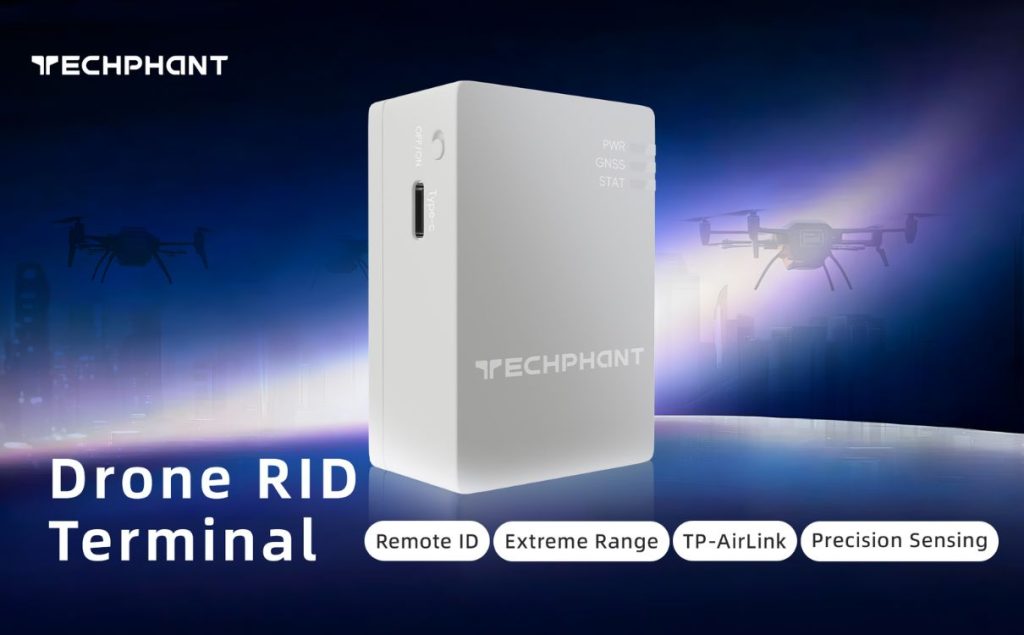
The system operates as a broadcast identification network, transmitting data via radio frequency (such as Wi-Fi or Bluetooth), making the drone’s position known to the surrounding environment . This broadcast typically includes a standardized set of information, creating a digital fingerprint for the drone in flight :
- Unique Drone Identification: A serial number or a randomized session ID (for privacy) that links to the drone’s registration.
- Real-time Position and Altitude: Current latitude, longitude, and geometric/barometric altitude.
- Velocity: The drone’s speed and direction of travel.
- Control Station Location: The take-off point and the operator’s location (or the location of the remote control).
- Time Mark: A precise timestamp for all transmitted data.
- Emergency Status: An indicator if the drone is in a distress condition .
This functionality transforms an anonymous flying object into an identifiable participant in the airspace, which is essential for building public trust and enabling the scalable growth of drone technology .
2. Technical Principles and Module Components
A Remote ID module is a sophisticated system that integrates sensors, processors, and communication units to gather and transmit the required data .
Sensor Suite – The Data Source: The module relies on, or incorporates, several key sensors:
Global Navigation Satellite System (GNSS) Receiver: Provides precise latitude, longitude, velocity, and time. High-quality modules often feature independent, multi-constellation (GPS, GLONASS, Galileo) receivers for reliability .
Inertial Measurement Unit (IMU): Supplies attitude and angular rate data, complementing GNSS to ensure continuous state awareness even during brief signal losses .
Barometric Pressure Sensor: Delivers altitude information, which can be used to supplement or calibrate GNSS altitude data .
Communication Hardware – The Broadcast Mechanism: The module contains a radio transmitter compliant with specific standards. The most common technologies are Bluetooth 5 (with Long Range and Extended Advertising capabilities) and Wi-Fi Beacon mode, chosen for their balance of range, power consumption, and interoperability with common receiving devices like smartphones .
Physical Form Factors: Modules come in various designs:
Built-in Modules: Integrated by the drone manufacturer into the aircraft’s core systems, typically drawing power from the main battery .
Add-on/Broadcast Modules: Standalone devices that can be retrofitted onto existing drones that lack built-in RID capability. These vary in size, weight, and power source—some have built-in batteries, while others are powered via an open servo port or the drone’s power system . They may be housed in protective cases or consist of bare electronics boards for minimal weight .
3. Technical Standards and Compliance
For global interoperability and regulatory acceptance, Remote ID modules must adhere to strict technical standards. These standards define the message formats, data structures, transmission protocols, and minimum performance requirements (e.g., a 1 Hz update rate) .
ASTM F3411-22a: The primary performance standard recognized by the FAA in the United States. It supports both Broadcast and Network-based Remote ID and defines the core data elements . The ASTM F3586 standard provides the specific “Means of Compliance” for manufacturers to declare their modules satisfy FAA regulation 14 CFR Part 89 .
prEN 4709-002 / EN 4709-002: The corresponding standard developed under the European Union Aviation Safety Agency (EASA) for the European market. While largely similar to ASTM F3411. it emphasizes broadcast compliance with EU regulations .
IETF DRIP Working Group: An ongoing effort to develop the Drone Remote Identification Protocol (DRIP), which aims to evolve Remote ID into a more robust internet-based protocol supporting authentication and secure communication for future airspace services .
These standards ensure that a module purchased in one region can function correctly and be recognized by monitoring systems in another, although operators must always configure the module for their specific flight operation area (e.g., USA, EU, China) .
4. Applications and Operational Use Cases
The implementation of Remote ID modules unlocks several critical applications in drone operations:
Regulatory Compliance: This is the most immediate application. Pilots have three main pathways to comply with regulations like the FAA’s rule:
Fly a Standard Remote ID Drone with built-in broadcast capability .
Retrofit an older or non-compliant drone with an aftermarket Remote ID Broadcast Module .
Operate a drone without Remote ID only within an FAA-Recognized Identification Area (FRIA) .
For recreational pilots, a single broadcast module can often be swapped between multiple registered drones .
Enabling Advanced Operations: Remote ID is a critical enabler for complex drone applications. By providing real-time situational awareness, it supports the safe management of airspace, which is a prerequisite for authorizing BVLOS flights, operations over people, and dense urban drone traffic .
Security and Safety Monitoring: The broadcast data can be received by various stakeholders:
Aviation Authorities: For airspace monitoring and traffic management.
Law Enforcement: To rapidly identify drones flying unsafely or in prohibited areas (e.g., near airports, critical infrastructure) .
Airport Security: To detect and identify drones in proximity to airports to prevent collisions and unsafe situations .
General Public: Using smartphone apps, individuals can identify drones flying nearby, enhancing transparency and community awareness .
5. Regulatory Landscape Across Different Regions
Remote ID has moved from concept to legally mandated requirement in key aviation markets, with modules being the primary tool for compliance.
United States (FAA): The rule (14 CFR Part 89) is fully in effect. Essentially all drones requiring FAA registration (typically over 250g or used commercially) must have and activate Remote ID during flight, either through a built-in system or an attached broadcast module . The final operational requirements for pilots became effective in March 2024 .
European Union (EASA): Regulation (EU) 2019/945 mandates remote identification for drones with CE class marks C1. C2. C3. C5. and C6. EU member states can define zones where only drones with remote identification can operate, making compliant modules essential for flexible flight operations .
Other Regions: Countries like Japan, China, and Thailand are developing and implementing their own Remote ID regulations and monitoring systems, often aligning with or adapting the ASTM or EN standards . This global trend underscores the module’s role as a universal key to compliant airspace access.
In summary, a Remote ID module is an essential piece of technology that equips a drone with the ability to broadcast its identity and location. It functions as the digital cornerstone for safety, security, and accountability in the rapidly expanding era of commercial and recreational drone use. By adhering to international technical standards, these modules provide a practical solution for operators to meet evolving global regulations while supporting the future of advanced and integrated airspace operations.