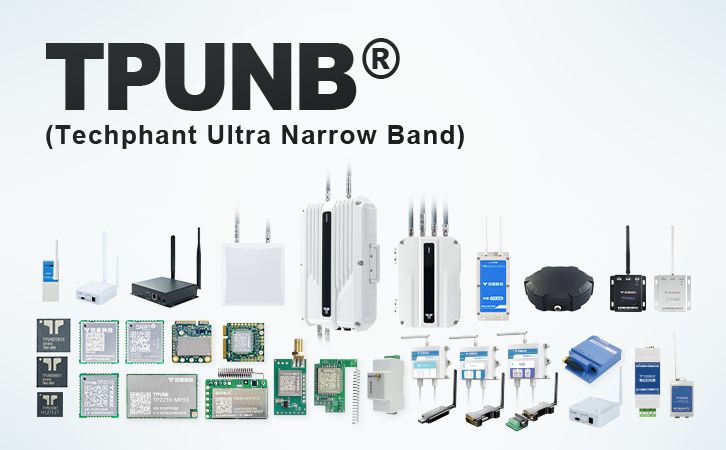
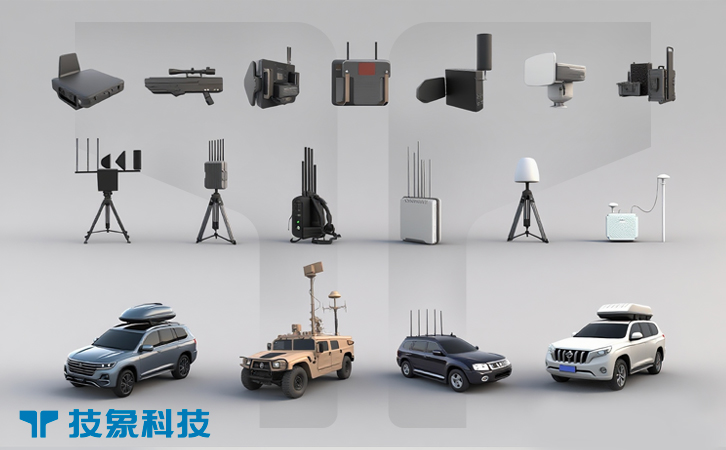
A wide variety of devices utilize sub-GHz frequencies (below 1 GHz, typically ranging from 27 MHz to 960 MHz). These devices primarily leverage the key advantages of sub-GHz communication: longer range, better wall/obstacle penetration, lower power consumption, and less interference compared to higher bands like the crowded 2.4 GHz ISM band .
Here is a comprehensive list of devices and systems that operate in sub-GHz bands, categorized by their application domain:
1. Consumer Electronics and Smart Home Devices
Remote Controls: For garage door openers, car key fobs, and industrial/consumer product remotes, often using frequencies like 315 MHz, 433 MHz, or 868 MHz .
Wireless Computer Peripherals: Such as keyboards and mice .
Smartwatches and Wearables: For health and fitness tracking with low-power connectivity .
Smart Home Systems: Devices within ecosystems like Z-Wave and some regional variants of protocols (e.g., Sub-1 GHz Zigbee) for home automation, security, and control .
Toys: Radio-controlled toys often use license-free sub-GHz bands .
2. Internet of Things (IoT) and Metering Devices
This is one of the most prominent application areas for sub-GHz technology.
Smart Utility Meters: Smart meters for electricity, gas, and water consumption are classic examples, enabling automated meter reading (AMR) over long distances .
Environmental and Agricultural Sensors: Used in smart agriculture for soil moisture, temperature, and humidity monitoring across large fields . Also includes weather stations .
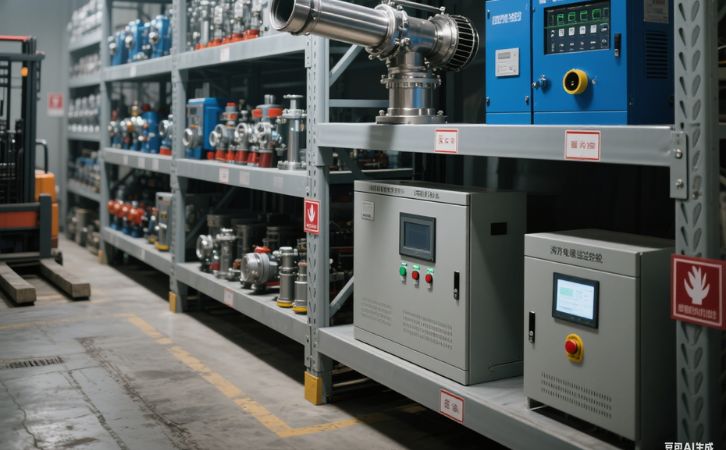
Industrial IoT (IIoT) Sensors: For condition monitoring of machinery, equipment telemetry, and sensor nodes in factories or remote sites .
Asset Tracking Devices: For monitoring the location and status of assets in logistics and supply chains.
Low-Power Wide-Area Network (LPWAN) Devices: A vast number of devices use LPWAN protocols that operate in sub-GHz bands, such as:
LoRa / LoRaWAN: Operates in bands like 868 MHz (Europe), 915 MHz (North America), and 433 MHz .
Wireless M-Bus: A standard for meter communication, using 868 MHz in Europe and 902-928 MHz in the USA .
WI-SUN: A mesh networking protocol for utilities and smart cities .
Amazon Sidewalk: A community network that utilizes sub-GHz spectrum (e.g., 900 MHz) alongside other frequencies .
3. Industrial, Scientific, and Medical (ISM) Devices
Sub-GHz bands are foundational for license-free ISM applications.
Industrial Monitoring and Control: Short-range devices (SRDs) for automation, safety systems, and building automation .
Medical Devices: Wireless health monitors (e.g., for patient vitals) and other medical telemetry equipment can operate in sub-GHz ISM bands to ensure reliable connectivity within facilities .
Scientific Telemetry: Data collection systems for environmental or equipment monitoring in research settings .
4. Automotive and Security Systems
Tire Pressure Monitoring Systems (TPMS): These commonly transmit tire data to the vehicle’s computer using sub-GHz frequencies (e.g., 433 MHz) .
Security and Locking Systems: Including wireless alarm sensors, smart locks, and gate controllers .
Two-Way Radios / Walkie-Talkies: Some models, especially for consumer or specific professional use, operate in sub-GHz bands like 433 MHz .
5. Infrastructure and Network Modules
IoT Gateway and Network Modules: RF modules like the CY-WR2002 are designed for industrial and agricultural IoT, operating at 433 MHz, 868 MHz, or 915 MHz to provide robust, long-range backhaul or mesh network links .
Smart Grid Devices: Components for grid resilience, demand-response systems, and distributed energy resource management .
Regional Frequency Considerations
It is crucial to note that the specific sub-GHz frequencies used by these devices vary by region due to regulatory allocations :
Europe, Africa, Russia: Heavily use 868 MHz (863-868 MHz) and 433 MHz .
North America, Australia: Use 915 MHz (902-928 MHz) and 433 MHz, 315 MHz .
China: Uses 470 MHz and 779 MHz bands .
Japan: Uses 426 MHz and 920 MHz bands .
These allocations are often governed by international bodies like the ITU and enforced by national regulators (e.g., FCC in the USA) .
In summary, sub-GHz frequencies are a cornerstone for wireless connectivity in applications where range, power efficiency, and reliability are more critical than high data speed. Their use spans from everyday consumer gadgets to critical industrial, utility, and medical infrastructure, forming the communication backbone of a vast portion of the IoT landscape .