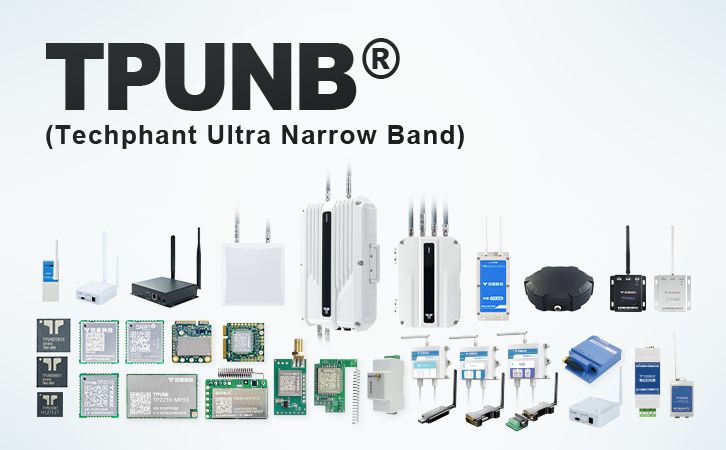
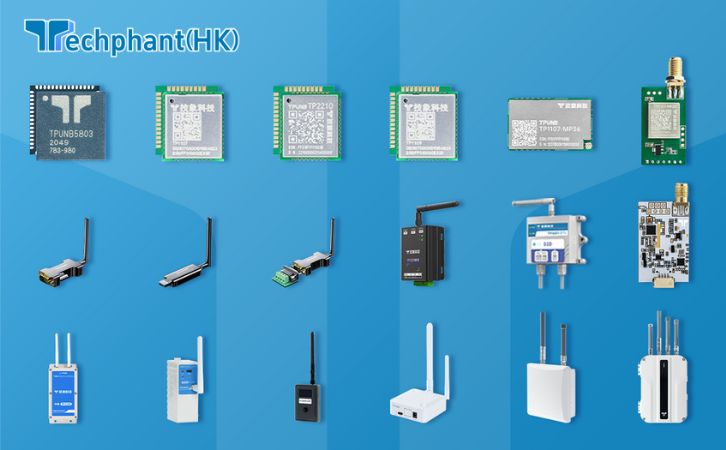
A LoRa module is a compact, integrated hardware component that implements the LoRa (Long Range) wireless communication technology, designed primarily for low-power, wide-area network (LPWAN) applications in the Internet of Things (IoT). It typically contains a radio transceiver chip (e.g., Semtech SX1262. SX1268. or SX1272), a microcontroller interface, and supporting passive components, all packaged in a small form factor (e.g., 30 mm × 22 mm × 2 mm) to enable easy integration into end devices .
1. Core Working Principle
The foundation of a LoRa module is the Chirp Spread Spectrum (CSS) modulation technique, a proprietary physical-layer technology developed by Semtech. Unlike traditional narrowband or direct‑sequence spread spectrum, CSS uses linear frequency chirps—continuous frequency sweeps over time—to encode data. Each symbol is represented by an upward or downward chirp, and the number of possible chirp values is 2^SF, where SF (Spreading Factor) ranges from 7 to 12 .
Key characteristics of CSS include:
Excellent interference and noise immunity: The wideband chirp signal can be reconstructed even when part of the spectrum is corrupted by noise or multi‑path fading .
Doppler resilience: CSS modulation is inherently robust against frequency shifts caused by relative motion .
Long range: By trading off data rate for link budget, a LoRa module can achieve line‑ofsight ranges up to 15 km in suburban areas and over 30 km under ideal conditions (e.g., flat terrain) .
2. Key Technical Specifications
The exact parameters vary by module model, but the following table summarizes typical values found in commercial modules:
| Parameter | Typical Values | Example Modules |
|---|---|---|
| Frequency bands | 433 MHz (Asia), 868 MHz (Europe), 915 MHz (North America), 470 MHz (China) | LoRa1268 (433/470 MHz) , SX1272 (902‑928 MHz) |
| Output power | Adjustable from -15 dBm to +22 dBm (max. 160 mW) | LoRa1268: -15 dBm ~ +22 dBm |
| Receiver sensitivity | Down to -134 dBm (at SF12. BW=125 kHz) | SX1272: -134 dBm |
| Data rate | 300 bps ~ 50 kbps (depending on SF and BW) | Typical LoRa: 0.3–50 kbps |
| Modulation | LoRa (CSS), also supports (G)FSK in some modules | LoRa1268: LoRa only |
| Interface | SPI, UART, I²C, ADC, GPIO, PWM | Multiple modules support SPI |
| Supply voltage | 1.71 V ~ 3.6 V | e.g., LoRa module in IoT home system |
| Operating temperature | -40 °C to +85 °C (storage up to +115 °C) | |
| Physical size | 30 mm × 22 mm × 2 mm (typical) |
Spreading Factor and Bandwidth trade‑offs: Higher SF (e.g., SF12) increases range and sensitivity but reduces effective data rate and increases airtime; wider bandwidth (125 kHz, 250 kHz, 500 kHz) increases data rate but reduces sensitivity .
3. Types of LoRa Modules
LoRa modules can be categorized by their functionality and integration level :
Standalone transceiver modules: Contain only the radio chip (e.g., SX1268) and require an external MCU. They communicate via SPI or UART – typical for custom designs .
Integrated microcontroller modules: Combine a LoRa radio with an embedded MCU (e.g., STM32WLE5 in the LoRa‑E5 module) – simplify development and reduce BOM .
Gateway modules: Designed for LoRaWAN gateways, featuring multi‑channel demodulators (e.g., 8 × SF5‑SF12 detectors) and a mini‑PCIe interface – used to aggregate data from many end devices .
Mesh/Networking modules: Support star or mesh topologies for extended coverage without a gateway – e.g., LoRa611II series with serial port interface .
4. Key Advantages
Ultra‑low power consumption: End devices can run on batteries for 5–10 years, thanks to duty‑cycled operation and efficient TX/RX modes .
Long range: Up to 15 km in suburban and 5 km in urban environments, far exceeding Wi‑Fi or Bluetooth .
Penetration: Sub‑GHz signals (433 MHz / 868 MHz / 915 MHz) better penetrate buildings and foliage .
Network scalability: A single gateway can handle thousands of nodes using pure ALOHA access and adaptive data rates .
Cost‑effective: Operates in unlicensed ISM bands, eliminating spectrum licensing fees .
5. Typical Applications
LoRa modules are deployed in a wide range of IoT use cases :
Smart metering: Remote reading of water, gas, and electricity meters – the module sends small data packets periodically over long distances .
Agriculture: Soil moisture, temperature, and humidity monitoring in large fields .
Smart city: Street light control, waste bin fill‑level monitoring, parking sensors, and air quality monitoring .
Asset tracking: GPS‑based location tracking for vehicles, containers, and personnel – often combined with a GNSS module .
Industrial IoT: Remote telemetry, pipeline monitoring, and fault diagnostics in factories .
Conclusion
In summary, a LoRa module is a ready‑to‑use RF component that encapsulates Semtech’s patented CSS modulation, enabling long‑range, low‑power, and interference‑resilient wireless communication for the IoT. By integrating the radio, sometimes a microcontroller, and various interfaces, these modules significantly reduce development complexity while delivering the core advantages of LoRa technology: kilometers of range, years of battery life, and robust network scalability. Their versatility across frequency bands and form factors has made them a cornerstone of modern LPWAN deployments in smart cities, agriculture, industrial monitoring, and countless other fields.