1. Core Advantages
This module is a high-performance LPWAN communication module launched by Techphant, with 5 core advantages:
- High-speed Transmission It supports maximum 76.8 kbps air interface data rate, much higher than the 19.2 kbps of traditional LoRa modules, which makes up for the low data rate shortcoming of LoRa IoT networks. It uses a deterministic scheduling algorithm to support high concurrency and avoid signal collisions.
- Ultra-low Power Consumption Adopting next-generation low-power technology:
- Low-power mode current: only 2μA
- Wake-on-air mode current as low as 18μA Compared with traditional LoRa modules, it can retain 90% of battery power after 1 year of use (LoRa only retains 40%), effectively extending terminal battery life.
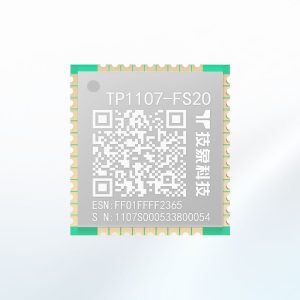
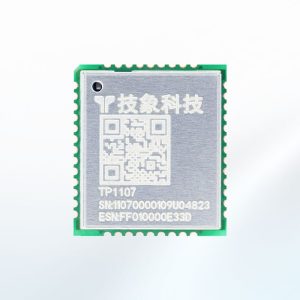
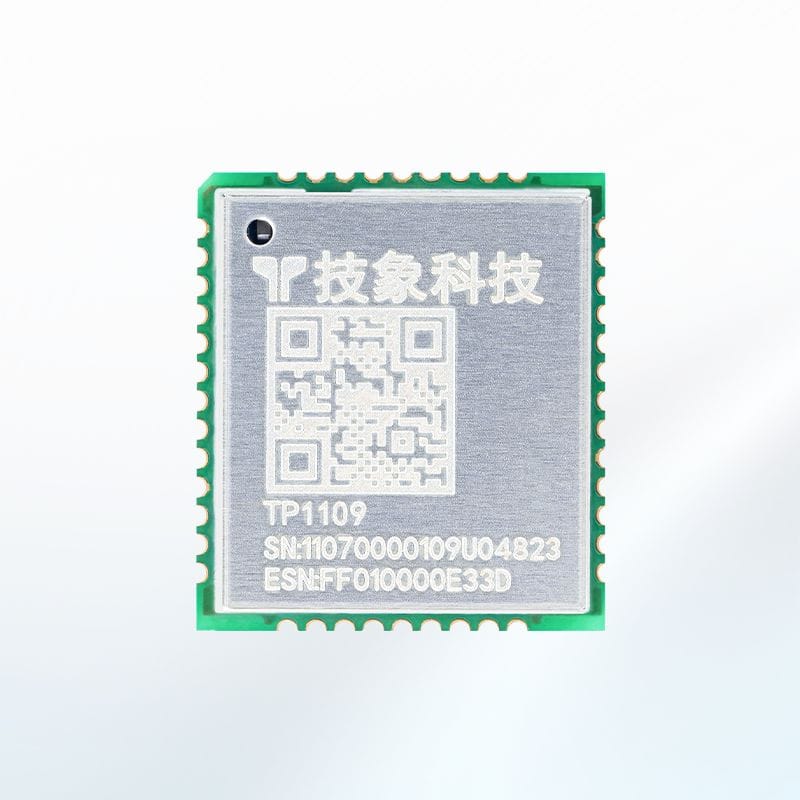
- Compact Size It adopts an ultra-small LCC SMT surface-mount package, with a size of only 17.7mm×15.8mm×2.2mm, which is suitable for integrated design of small-sized IoT terminals.
- Flexible Configuration All communication and function parameters can be configured freely, which can adapt to different application scenarios and requirements.
- Long-distance Communication It has high receive sensitivity and is suitable for long-distance networking communication in complex environments.
2. Wireless Specifications
| Parameter | Details |
|---|---|
| Operating Frequency Band | 433MHz / 470-510MHz (customizable) |
| Receive Sensitivity | -111dBm @19.2kbps -107dBm @76.8kbps |
| Modulation | S-FSK |
| Operating Bandwidth | < 200 kHz, single carrier |
| Air Interface Data Rate | 2.4 kbps (uplink) / 19.2 kbps (downlink) 76.8 kbps (uplink) / 76.8 kbps (downlink) |
| Antenna Interface | LCC pads |
3. Hardware Specifications
| Parameter | Details |
|---|---|
| Application Interfaces | 1. AT serial port: TTL level, baud rate 9600 bps 2. Debug serial port: TTL level, baud rate 115200 bps 3. RI signal 4. Wake signal 5. RST_OUT signal 6. Network status indication LED 7. SWD programming & debug interface |
| Operating Current | Transmit current: 88.2mA @ 3.3V, 20dBm Receive current: 15.8mA @ 3.3V, 470 MHz Sleep current: 4.5μA @ 3.3V (RTC enabled) |
| Operating Temperature | -40°C ~ +85°C |
| Storage Temperature | -40°C ~ +90°C |
| Dimensions | 17.7mm×15.8mm×2.2mm |
| Pin Count | 44 pins |
| Package | LCC SMT surface-mount package |
4. Networking Modes
The module supports flexible networking according to different scenarios:
- Local Star Network:
TP1109 + TP2210 - Cloud Star Network:
TP1109 + TP2108 - Point-to-Point / Mesh Network:
TP1109 + TP1109
5. Interface & Reference Design
- Module Interface Definition The module provides standard application interfaces, which connect with DTE (Data Terminal Equipment, application terminal):
- RF interface: Connect to antenna
- Power interface: Supports 2.6~3.6V power input
- UART interface: For data communication with terminal
- GPIO interface: For extended control signals
- Typical Peripheral Circuit Framework The typical peripheral design includes:
- Power supply: Powered by lithium-thionyl chloride battery, supports DC2DC/LD0 power conversion
- Antenna path: Antenna interface → TVS protection → II-type matching → module antenna PAD
- Terminal connection: UART/GPIO connect to DTE MCU; SWD interface for development debugging; LED for network status indication
6. Test Kit Option
A special test kit is provided for product evaluation and development:
- Kit Composition: Pre-soldered TP1109 test board + SMA-J connector rubber duck antenna
- Kit Features:
- Designed for TP1109 function testing and evaluation
- TP1109 is pre-soldered on the test board, ready to use
- All pins of the module are broken out, which is convenient for functional testing
- Built-in Type-C interface, which can be directly connected to PC for plug-and-play development and debugging